
How Much Tractor HP for Food Plots, Pasture, and Hay?
The plain-English HP answer for disking food plots, bush-hogging pasture, or baling small hay lots in South Mississippi — matched to real LS models.
Every week someone walks in and asks the same thing: how much tractor do I actually need? It sounds simple. It is not. A 24-horse sub-compact that handles a half-acre garden just fine will bog down dragging a disc through a ten-acre food plot. And a 57-horse machine is money you do not need to spend if your land is pasture that gets cut three times a year.
If your use falls into one of these three categories, here is the honest breakdown.
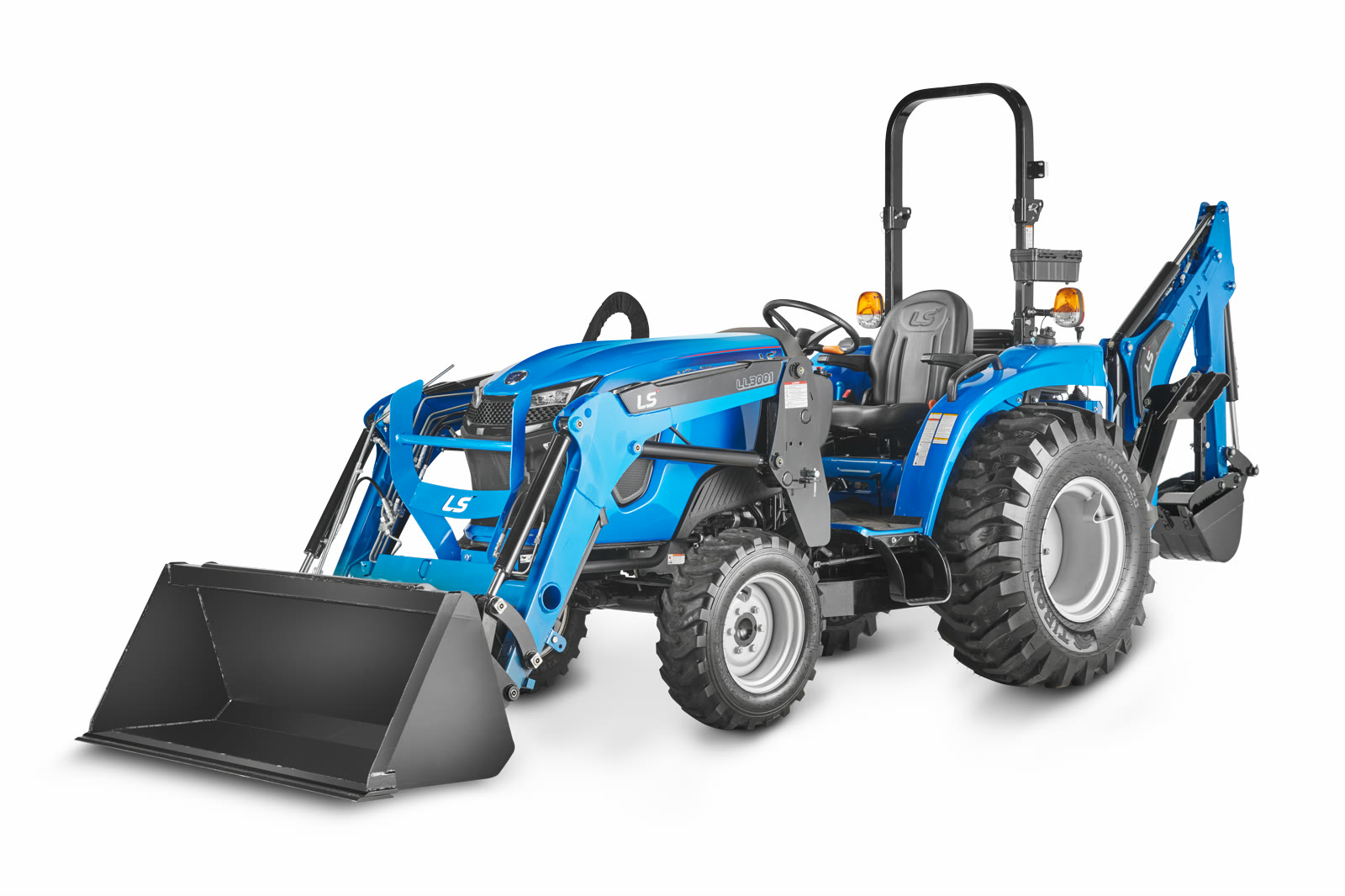
Food plots: 25 to 42 HP is usually right
A food plot tractor has one demanding job and several lighter ones. The demanding job is pulling a tiller or disc through South Mississippi clay in September, when the ground has been baking since June. That takes torque at the PTO shaft, not just engine horsepower on the sticker.
For plots up to five acres, 30 to 32 HP is plenty if the machine has a real Category I hitch and at least 26 PTO horsepower. The MT232HE runs 31.7 engine HP and 26.2 PTO HP. It handles a 5-foot tiller in clay soil, lime spreading, grading camp roads, and general food plot maintenance without complaint.
For plots between five and fifteen acres, or when you want to cover more ground per pass with a bigger disc, 42 HP changes the math. The MT242HE delivers 34.8 PTO horses. It saves passes and time in the field when daylight is short and deer season is two weeks out.
Where you can go wrong: buying a sub-compact because it was the cheapest option, then running it at full PTO load for two hours straight in clay. Sustained overloading shows up in the drivetrain at 800 or 1,000 hours, and that warranty conversation is a hard one.
Pasture mowing: 30 to 47 HP depending on the grass
Routine mowing on pasture that gets cut every three weeks is easy work. Mowing pasture that has been sitting since April is a different job. South Mississippi summer grass gets woody fast, and by late July you are cutting stems that a light machine will bog on.
A 5-foot rotary cutter behind a 32-horse tractor handles kept-up pasture without any trouble. The MRC3060SC (60-inch slip-clutch cutter) is rated from 24 to 50 HP, so it runs clean behind the MT232HE and the MT242HE both.
If the pasture goes two months between cuttings, or you want a 6-foot cutter, move to 40 to 47 HP. That is where the top of the compact lineup sits. The MT347HC (47 HP, hydrostatic, cab with heat and air) will mow overgrown pasture in July without straining, which matters when you are on it all morning.
Who does not need to step up: anyone running a 5-foot cutter on land that stays on a regular schedule. Buying more machine than the job calls for is expensive, and on a typical South Mississippi hobby farm of 10 to 30 acres, the extra horsepower rarely pays for itself.
Small hay: 40 to 57 HP minimum
Hay is where the numbers get serious. Running a mower-conditioner and a round baler means sustained PTO load for hours at a time across long fields in South Mississippi summer heat. Anything below 40 PTO horsepower starts to bog a real hay operation.
For a small hay field of 20 to 40 acres, a machine in the 45 to 57 HP range handles it without constant strain. The MT345E (45 HP, gear drive, 36 PTO HP) and the MT355E (55 HP, gear drive, 44 PTO HP) both sit in the compact series and are built for all-day field work. Gear drives are what most hay operators prefer here. There is nothing complex to fail on the transmission.
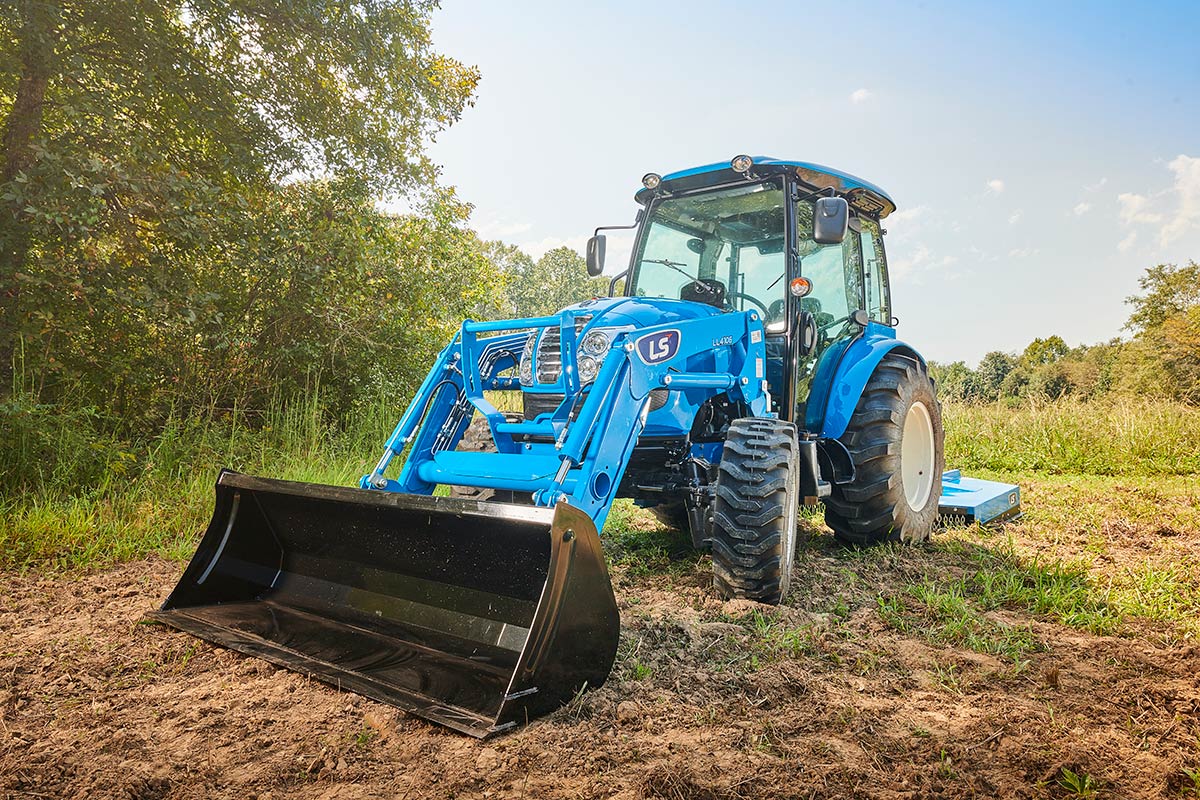
If you also run cattle and cut hay at the same time, or your hay fields run bigger than 40 acres, the utility series is worth the conversation. But for most South Mississippi farms running a few hundred bales a year, the upper compact range keeps the cost in reach and the machine manageable.
The number that actually matters: PTO horsepower
Engine horsepower is what gets marketed. PTO horsepower is what does the work at the implement. Before you commit to a model, ask for the PTO number. The gap between engine HP and PTO HP varies enough across the lineup that it changes the real-world comparison. A machine with 45 engine HP and 36 PTO HP pulls differently than one with 42 engine HP and 34 PTO HP. Read the spec sheet before you decide.
All the figures above come from the LS lineup we stock and order here in Collins. Compare the full compact series at /ls/compact and the utility class at /ls/utility. LS financing is available if the monthly payment changes the math on which tier makes sense.
Come by 3069 Hwy 49 in Collins or call (601) 516-7255 to run through the numbers for your specific land. Bring your acreage, what you plan to do with it, and how often. That is all we need to point you at the right machine.