
Fall Food Plot Prep: Which Implements to Run in South MS
Mid-November is when South Mississippi food plots need attention. Here is how to match your LS compact tractor and implements to the fall work ahead.
Deer season in South Mississippi arrives the same week every year, right when the work on food plots is either done or not. If yours are not where you want them, the right tractor and attachments are what close that gap. Here is how to sequence fall food plot work and which LS compact tractors handle it without struggling.
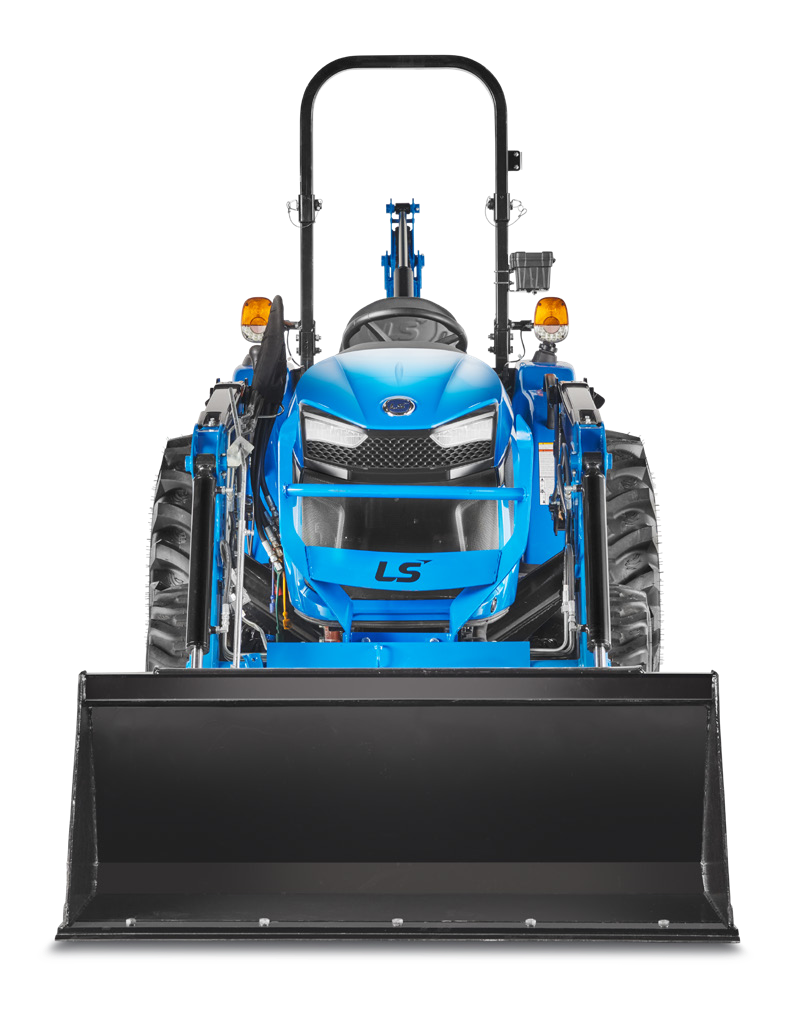
You can browse the full LS compact tractor lineup at Dykes Motors if you are still sizing up machines, but the advice here applies whether you already own one or are figuring out what to buy.
Cut first, then till
Most food plots that come back poor in fall have one problem: too much existing competition. If you did not spray or mow before planting, you are fighting whatever grew through summer for the whole season. The first pass should almost always be a rotary cutter.
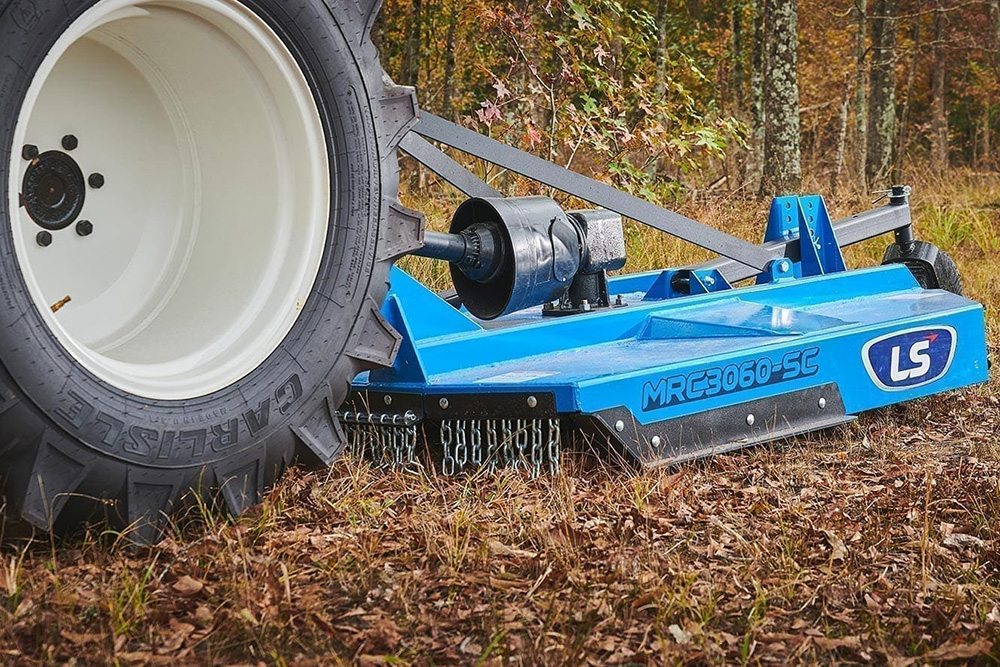
A 60-inch rotary cutter like the LS MRC3060SC needs between 20 and 30 PTO horsepower to run at full speed through August-thick stands of grass and broadleaf weeds. The MT232HE at 26.2 PTO HP runs it without complaint. The MT242HE at 34.8 PTO HP handles it even better, especially if the growth is tall and dense or if you have been letting it go since summer.
Do not use a finish mower for this job. Finish mowers are built for maintained grass, not for brush and thick vegetation. A rotary cutter with a slip clutch protects the gearbox when it hits a hidden stump or stick, which happens in every South Mississippi food plot eventually. That slip clutch matters.
Tillage: when to disc, when to till
After cutting, what happens next depends on what you are planting.
Winter rye, wheat, and clover need a prepared seedbed. That means tilling or discing to break up the top layer, work in any lime or fertilizer you have already spread, and give seed-to-soil contact. Without it, most of your seed sits on top and either sprouts weak or does not germinate at a good rate.
A rear-mount PTO tiller does the cleanest job on a small food plot of an acre or two. PTO tillers typically require 25 to 40 PTO horsepower depending on width and how hard the soil is. The MT232HE at 26.2 PTO HP handles a 48 to 60-inch tiller in loose or already-worked soil. If your ground is hard clay that has not been touched in a few years, the MT242HE at 34.8 PTO HP gives you more headroom before the engine starts loading up on a hot afternoon.
If you already have a disc, it works fine for established plots. A box blade can scratch in loose soils, but it is not a substitute for a proper seedbed preparation on hard ground. Use the right tool for the job.
Match the machine to the acreage
A sub-compact in the 20-HP range is enough for a half-acre garden plot or a small supplemental plot in the woods. For food plots in the 1 to 5-acre range, the compact tractors in the LS MT2E series are the right fit. Enough PTO to run real implements, easy to maneuver in tight fields with trees and fence corners, and straightforward to maintain between runs.
For plots larger than 5 acres, or on ground that has not been worked in a few years, moving up to the LS MT3 series at 42 to 57 HP makes the work go faster and easier on the machine. The MT345E at 45 HP and 36.0 PTO HP is a solid choice for harder tillage work without paying for a full utility tractor.
What most people get wrong
Two problems come up most often. First, running a tiller in hard, dry clay. If the ground is baked solid, wait for rain to soften it, or at least let the cut vegetation break down for a few days before tilling. Forcing a tiller through dry clay in October wears out belts and bearings faster than anything else.
Second, no front ballast when running heavy rear implements. If you are running a heavy box blade or tiller and the front end starts coming off the ground when you dig in, that is a sign you need front weight. A rear-mounted implement shifts the balance backward and reduces steering control, especially on any kind of slope. Many LS owners use a loaded front bucket as ballast. Our LS attachments page has more on what pairs with each machine.
A word on timing
November in South Mississippi is still warm enough that rye and clover can establish before a hard frost. That said, the window gets shorter every week. If you have not cut or tilled yet, do it now rather than waiting. A plot that goes in late is better than one that never goes in.
If financing is on your mind, LS has 0 percent financing available on MT2 and MT3 models right now, which makes it possible to have the right machine for this season's work without a large upfront payment.
Come run one on the lot at 3069 Hwy 49 in Collins, or call (601) 516-7255. We can walk through which machine and attachments fit your property.