
Home › Blog › Farm Mowing in Mississippi August Heat: What Your Zero Turn Needs to Last
Farming
Farm Mowing in Mississippi August Heat: What Your Zero Turn Needs to Last
What Mississippi cattle and row-crop farmers should know about mowing in 95-degree August heat — engines, hydraulics, operator comfort, and the ISX 800.
August 4, 2026 · Sam, Dykes Motors — Collins, MS
August in Mississippi is serious. By mid-morning the humidity is thick, the thermometer is pushing 95, and you've still got fence lines to run and pasture edges to clean up before the afternoon storm hits. This is the part of the mowing season that separates a machine built for commercial work from one that isn't.
Most summer mower failures aren't surprises. They build for weeks: a clogged air filter, hydraulic fluid running too hot through long pasture loops, a belt heat-cycling since May. The machine tells you before it quits — but only if you know what to watch.
What Heat Does to a Zero Turn
Air-cooled engines work against themselves in high ambient temperatures. The heat you're generating at the engine meets heat coming off the ground and the air around you. Cooling fins pack with grass clippings and dust fast — especially on a farm with dry Bahia or Bermuda going brown in a drought stretch. A clogged cooling fin situation in July is a cracked head situation by September if you're not cleaning it out.
Hydraulic drives are the other issue. Hydrostatic transmissions generate heat during operation. On a short residential run, the fluid cycles and cools. On a two-hour continuous pasture run around a pond bank or along a fence line, that fluid stays hot. Hydro-Gear specifies operating temperatures for a reason — running at the edge of that range, hour after hour, wears seals and reduces drive response over time.
Air filters in dusty conditions need attention more often than most farmers give them. In normal conditions you might check every 25 hours. Mowing dry August hay fields or dusty cattle roads, you should be looking at the filter every 8 hours.
Why Engine Choice Matters at 95 Degrees
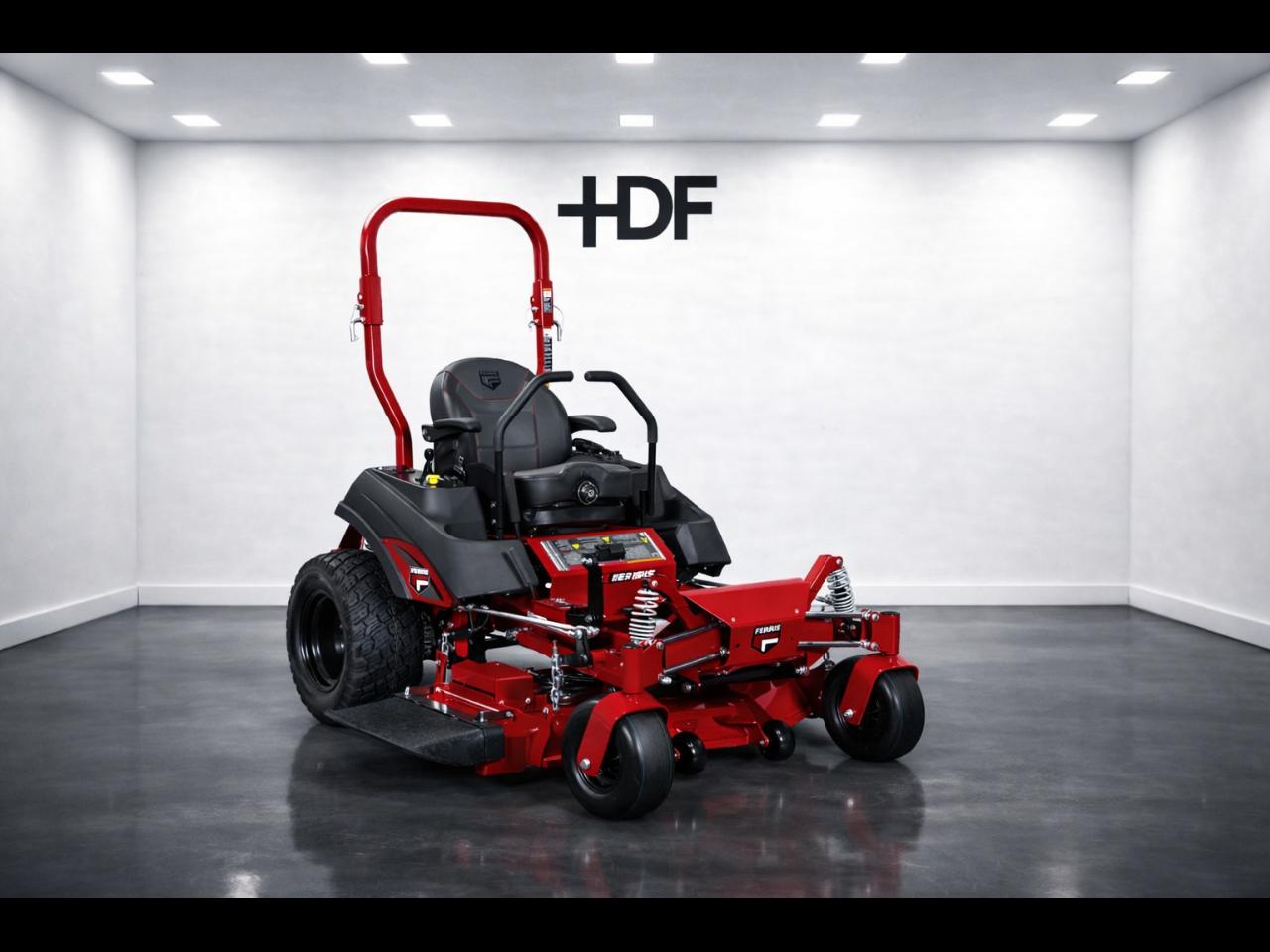
The Ferris ISX 800 is available with two engine options: the Briggs & Stratton CXi EFI-ETC with OilXtend, or the Kawasaki FT730V.
The EFI versions — both the B&S and the Kawasaki FT730V EFI — adjust fuel delivery as operating conditions change. A carbureted engine runs on a fixed mixture. As ambient temps climb and air density drops, a carb engine can run rich and create more heat. Fuel injection compensates automatically. On a farm in Lincoln or Marion County mowing through August, the efficiency advantage is real.
The Kawasaki FT730V carb is still a proven commercial engine — the FT-series runs thousands of hours on commercial crews. The point is to understand the difference and pick accordingly.
OilXtend on the B&S EFI-ETC extends oil change intervals. Confirm with your operator manual rather than going by habit from your old machine.
Hydraulic Capacity and Operator Fatigue on Long Farm Runs
The ISX 800 runs Dual Hydro-Gear ZT-3400 transaxles. The IS 700 — the step below — runs ZT-3200. Both are commercial-rated, but the 3400 has more thermal capacity for sustained runs across pasture at 8–10 mph. If you're running long fence-line loops in August, that extra margin matters.
The Ferris suspension system matters too, and not just for comfort. A farmer mowing rough cattle ground in two-hour stretches on a rigid-frame machine is going to be beat by hour three. Fatigued operators miss things — a belt squeal, a hydraulic hesitation, a temp warning. The suspension on the ISX 800 keeps you more alert longer, and keeps the deck level on uneven ground. See how Ferris builds that into the platform at why-ferris.
Summer Maintenance That Matters
A few things to add to your routine between now and first frost:
- Air filter: check every 8 hours in dusty conditions. Replace rather than blow out a clogged filter.
- Cooling fins: clean after every use. Grass clippings pack in fast.
- Hydraulic fluid: check level at each service. Heat cycling drifts the level over a season.
- Belts: inspect every 50 hours. Summer heat ages belts faster than normal use.
- Oil: follow the OEM interval. EFI-ETC OilXtend units have extended intervals; confirm before skipping.
For parts or a service appointment, call (601) 516-7255 or see what we stock at /ferris-mowers/parts. The service department can schedule a pre-fall inspection if your machine has been working hard this summer.
Who Should Be Looking at the ISX 800
The ISX 800 at $10,749 and up is for the farmer who's putting real hours on the machine — 200 or more hours a season across a working property. That's cattle operations with pasture maintenance, row-crop farms with long fence lines, or any setup where the mower is a production tool, not a once-a-week convenience.
If you're closer to 100 hours a season with manageable terrain, the IS 700 at $8,649 is still a commercial machine with independent suspension and a 27 HP engine. It's a real step up from residential equipment without the ISX price.
Both are in our catalog at dykesmotors.com/ferris-mowers. Come by 3069 Hwy 49 in Collins — we're a straight shot from Brookhaven down 51 and an easy drive from Columbia. Call us at (601) 516-7255 and we'll walk you through both machines for your acreage.
Related reading
Ready to find your mower?
We're an authorized Ferris dealer in Collins, MS — in stock, ready to demo, and financing available.