
Home › Blog › Mowing Mississippi Farms in Summer Heat: What to Know Before August
Farming
Mowing Mississippi Farms in Summer Heat: What to Know Before August
Farm mowing in Mississippi July means 95-degree heat, hydraulic stress, and long hours. Here is what your commercial mower needs to survive August.
July 7, 2026 · Sam, Dykes Motors — Collins, MS
July and August are when you find out what your mower is actually made of. On cattle and row-crop operations from Raleigh down through Smith County, farms run mowing rotations through the summer to keep pastures, fence lines, and pond banks in shape. Bermuda grass doesn't stop growing in the heat. Neither does the work.
The difference between a machine that handles Mississippi summer and one that doesn't shows up in the afternoon. By 1 p.m., you've got full sun, ambient temps pushing 97 degrees, and a mower that's been running hard since 8 a.m. Sluggish hydro response, engines lugging in thick material, operators worn out from vibration — those are the symptoms of a mower that's out of its depth.
Here's what to pay attention to when you're buying or running a farm mower through the summer.
What Heat Does to Hydraulic Systems
Hydraulic fluid thins at high temperature. When it thins, it loses pressure-holding ability, and the hydrostatic transaxles driving the wheels start showing it — sluggish steering, inconsistent tracking, sloppy response on hills.
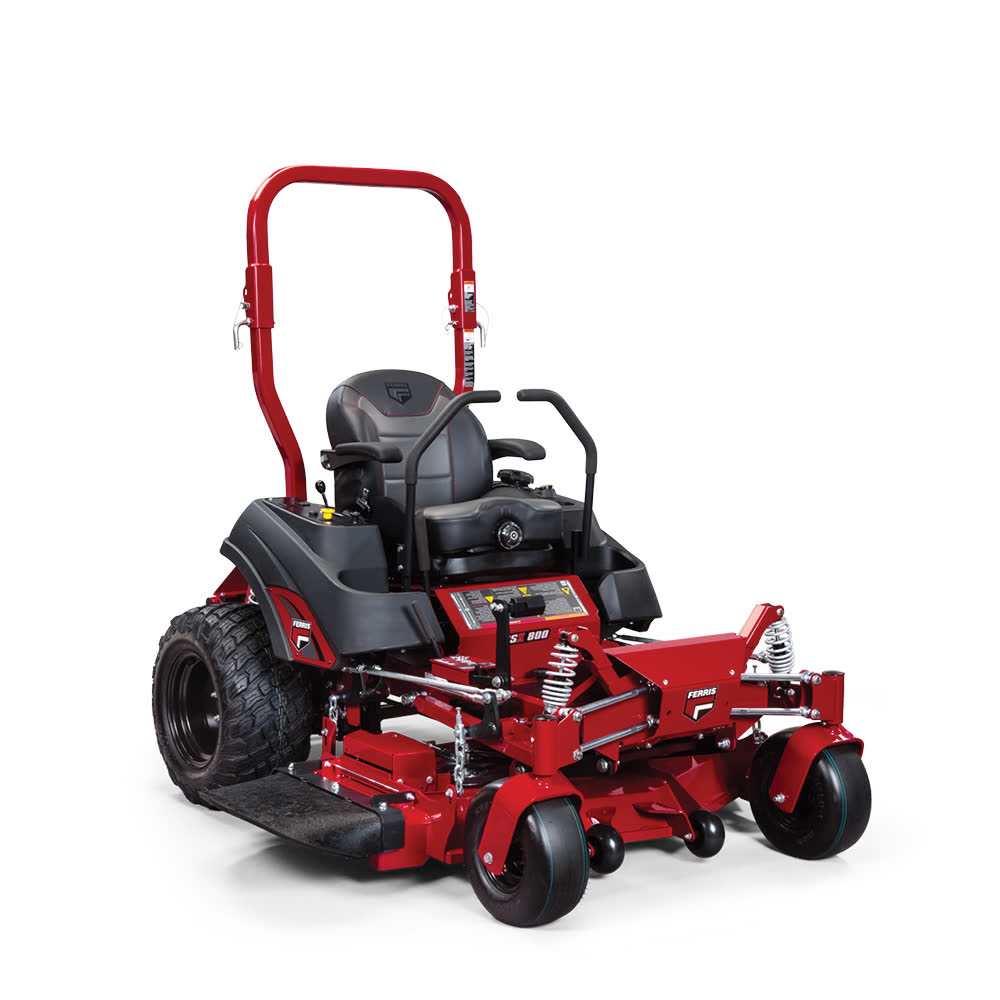
The Ferris ISX 800 uses Hydro-Gear ZT-3400 transaxles, a step up from the ZT-3200 units in the IS 700 Series. The ZT-3400 is rated for heavier sustained load. That matters when you're running five-hour blocks in Mississippi heat across rough pasture terrain, not just an occasional short job.
This doesn't replace fluid maintenance. Change your hydraulic fluid at the interval in your operator manual, and check the level weekly during summer peak. If the fluid looks dark or smells burned, change it. That's a $30 fluid change versus a transaxle rebuild.
Engine Choice in Mississippi Heat
The ISX 800 comes with two engine options: the Briggs & Stratton CXi at 27 hp and the Kawasaki FT730V at 24 hp. Both are commercial-grade. They behave differently under sustained heat.
The Kawasaki FT730V has a consistent reputation for thermal management in extended commercial use. It runs clean under long load and heat cycles. For flat pasture cutting with manageable growth, the Kawasaki holds up well through summer.
The Briggs CXi at 27 hp puts out more power. That matters on hilly ground and in thick late-summer Bermuda regrowth that can bog a smaller engine. For farms in Smith and Covington counties where terrain changes and grass comes back heavy after every summer rain, that extra horsepower keeps rpm from dropping in material.
Neither is a wrong choice. Match the engine to your actual conditions.
Operator Fatigue Costs Mowing Time
A two-hour session on flat ground is different from running eight hours of pasture with terrain changes. Vibration compounds. By hour five, it shows in pace and accuracy.
The ISX 800's independent suspension system absorbs continuous ground shock across all four wheels. How Ferris builds that suspension — four independent corners, not just a single front pivot — makes a real difference on rough terrain. Operators on suspended machines work longer without the physical toll that non-suspended machines put on your back and knees. On farm work where mowing blocks run long, that's real productivity, not a comfort add-on.
What the ISX 800 Costs
At Dykes Motors, the Ferris ISX 800 with a 52" deck runs $10,199 (MSRP $11,769), current rebate applied. The 60" deck version is $10,399 (MSRP $11,989).
For properties under 20 active mowing acres where terrain is manageable, the IS 700 is worth comparing. It starts at $8,749 (MSRP $9,954) and uses the same 27 hp CXi engine with ZT-3200 transaxles. The right call if you're running shorter cycles on flatter ground.
The ISX 800 step-up makes sense when you're running long cycles, rough terrain, or need the transaxle capacity to handle summer heat without margin issues.
Summer Maintenance You Can't Skip
Heat accelerates wear on specific items:
- Air filter: Inspect every 25–50 hours. Summer field dust loads up faster than spring pollen. A restricted filter runs the engine hotter.
- Belt tension: Heat cycling loosens drive belts faster than cooler conditions. Check belt condition after every 25 hours in summer.
- Hydraulic fluid: Check level weekly during heavy use periods. Change per operator manual intervals.
- Tire pressure: Ambient heat raises pressure. What you set in April needs to be rechecked in July for accurate cut height.
Our service department at 3069 Hwy 49 in Collins carries OEM parts and filters for everything we sell. If your machine needs attention before August picks up, call (601) 516-7255 to schedule.
For sales on the ISX 800 or IS 700, call (601) 516-7255, or stop by 3069 Hwy 49, Collins, MS.
Related reading
Ready to find your mower?
We're an authorized Ferris dealer in Collins, MS — in stock, ready to demo, and financing available.