
Home › Blog › Cut Height, Striping, and Scalping on Mississippi Grasses
Turf Management
Cut Height, Striping, and Scalping on Mississippi Grasses
Bermuda, Bahia, and Centipede all cut differently. How to set deck height, avoid scalping on uneven South Mississippi terrain, and stripe Bermuda cleanly.
September 15, 2026 · Sam, Dykes Motors — Collins, MS
Mississippi turf doesn't all cut the same. Bermuda, Bahia, Centipede, and St. Augustine each respond to different deck heights and different cutting rhythms. Run all of them at the same setting and you'll get acceptable results. Dial it in by species and terrain, and the difference shows up immediately — a clean-looking property versus one that takes extra cleanup after every pass.
Recommended Deck Heights by Grass Type
Bermuda is the most common commercial turf in South Mississippi. Maintained lawns typically run at 1.5–2.5 inches. Sports turf managers and crews trying to get a tight, dense cut on a well-leveled surface can push lower, but on anything with uneven grade, going below 1.5 inches invites scalping. High-end residential in the Hattiesburg and Petal areas is usually Bermuda, and 2 inches covers most of it cleanly without stressing the crowns.
Bahia is a different animal. It's tough, drought-tolerant, and common on farm edges, right-of-ways, and rural properties through Lincoln and Lamar counties. Cut it at 3–4 inches. Trying to knock Bahia down to 2 inches consistently is hard on blades and produces an uneven, patchy look the grass recovers from slowly.
Centipede is common in South Mississippi residential turf. It's more delicate than Bermuda and doesn't rebound well from a hard scalp. Keep it at 1.5–2.5 inches and avoid cutting more than one-third of the blade at a time during heat stress in summer.
St. Augustine shows up in shadier landscapes closer to the coast. It needs 3–4 inches to stay healthy. It does not handle aggressive cutting in July or August — drop below 2.5 inches during heat and you'll see it thin out over the following weeks.
Why Scalping Happens
Scalping is when the deck dips into a low spot and cuts too close to the soil, exposing the crown or bare ground. It damages the grass and leaves visible brown patches. Most scalping traces back to three causes: terrain the deck doesn't follow, a height setting too low for the surface conditions, or running too fast through dips and rises.
A flat-deck zero turn is essentially rigid. When the front wheels drop into a depression, the deck can catch the crest right behind it and scalp. The solution isn't just slowing down — it's a machine that tracks terrain better.
The Ferris ISX 800 addresses this with ForeFront suspension, which lets both the front axle and rear chassis flex independently as the machine moves across uneven ground. The deck stays at a more consistent height above the soil without the operator manually compensating on every pass.
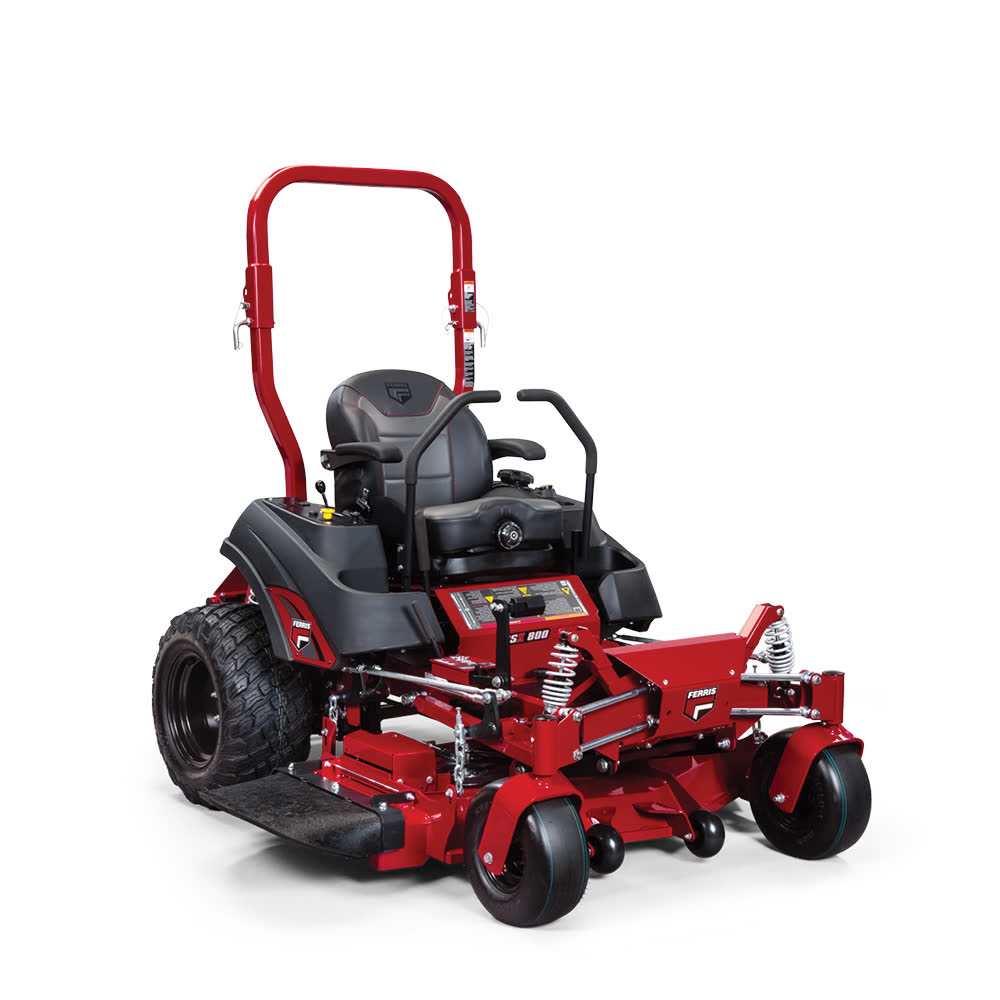
The Ferris IS 700 runs front caster fork suspension, which takes a lot of the front-wheel bounce out of the equation. It doesn't have the full ForeFront system, but it's still a step ahead of a rigid-deck competitor running at the same speed on the same terrain.
If scalping is a consistent problem on your accounts, the first question is whether the machine is following the terrain or fighting it.
Striping on Bermuda
Bermuda stripes well because the blades bend in the direction of cut and reflect light differently. Alternating passes in opposite directions builds visible contrast over a few mows.
The Ferris iCD+ cutting system creates consistent suction airflow through the blade pass, which lifts the grass upright before the cut. That matters for stripe clarity — a grass blade standing up cuts clean and bends predictably. One that lies flat gets cut unevenly and creates a messy, gray-tinted result.
Sharp blades are the other half of it. Check blades every 8–10 hours of cutting time, especially in sandy South Mississippi soils where edges dull faster. Tearing instead of a clean cut is the sign you've waited too long.
Making It Work on a Commercial Route
A crew running Bermuda accounts around Hattiesburg with mixed terrain needs a machine that can dial height quickly and track ground without constant correction. The ISX 800's deck adjusts from 1.5 to 5 inches in quarter-inch increments — wide enough to cover Bermuda, Centipede, and Bahia on the same day without switching equipment.
For a route-based operation, that flexibility reduces time between accounts and keeps each property looking consistent rather than fighting the machine to compensate for terrain.
Browse the Ferris commercial lineup or come by 3069 Hwy 49 in Collins. Our service team handles blade sharpening, deck adjustments, and full inspections at (601) 516-7255.
Related reading
Ready to find your mower?
We're an authorized Ferris dealer in Collins, MS — in stock, ready to demo, and financing available.