
Home › Blog › Mowing Around Broiler Houses: Stand-Ons, Deck Width, and Between-Flock Timing
Poultry
Mowing Around Broiler Houses: Stand-Ons, Deck Width, and Between-Flock Timing
Mississippi broiler farmers deal with tight fan-cone clearances and wide pad areas. Here's how to pick the right Ferris stand-on or zero turn for each zone.
July 28, 2026 · Updated August 24, 2026 · Sam, Dykes Motors — Collins, MS
Mowing around broiler houses is its own category of work. It's not pasture mowing, it's not a landscaping route, and it's nothing like what most residential machines are built for.
Broiler operations in Simpson and Scott County are running 40,000 to 55,000 birds per house. Gravel pad edges, fan-cone zones at the end of each house, tunnel inlet clearance, the ground between houses — each area has a different requirement for what machine you put on it. Getting the wrong equipment for any of those zones costs you time, mower repairs, or both.
Here's how to think through the decision.
The Two-Zone Problem
A commercial broiler setup has at least two distinct mowing environments.
Tight zones: The end of each house where tunnel fans are mounted. Clearance between the fan cones and the exterior wall is limited. You may have four to six feet of workable space before you're working against the cones themselves. Vegetation control here matters for airflow — overgrown grass and weeds close to the inlets affect fan performance and, depending on your integrator's requirements, biosecurity sign-off. Same issue at the sidewall curtain tracks and the concrete aprons on older houses.
Wider zones: The access road between rows of houses, perimeter areas along the building sidewalls, and the open ground beyond the gravel pad. On a well-spaced multi-house farm, these can run 80 to 150 feet wide. This is where you want more deck width and more ground speed — the goal is throughput, not precision.
Trying to run both zones with one machine usually means either jamming a 60" zero turn into fan-end areas it can barely navigate, or running a smaller machine through wide open ground that takes twice as long to finish.
Stand-Ons for the Fan Ends
The Ferris SRS Z3X is the machine we recommend when the tight-zone problem is real. The 52" deck gives you the maneuverability to work close to fan cones and tunnel inlets without the footprint of a full-size sit-down zero turn. The stand-on platform puts you on your feet, so you can see exactly where the front of the deck is relative to fan hardware, cable guards, and concrete edges.
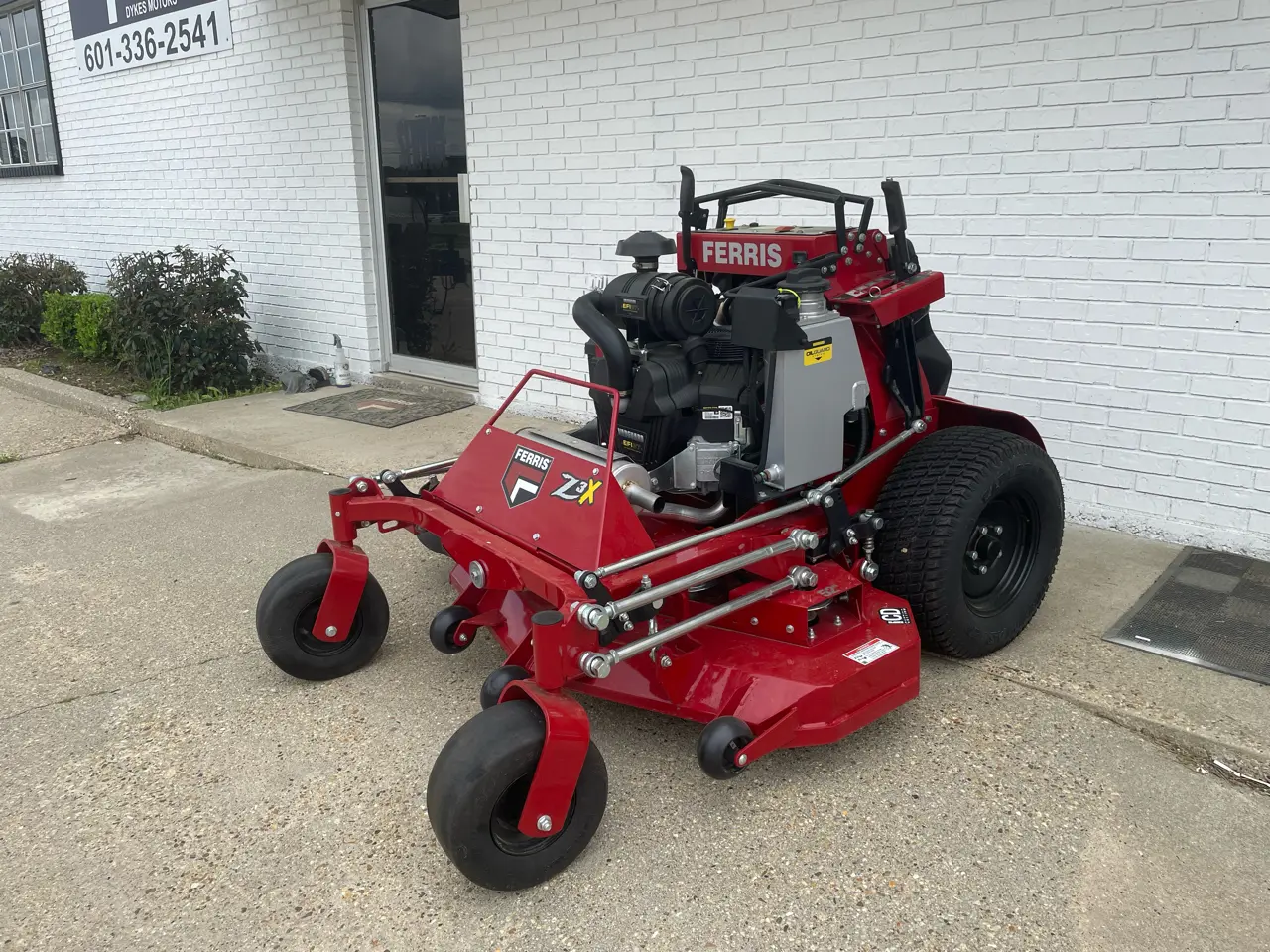
The Kawasaki FX850V configuration — 27 hp, 52" deck — comes in at $11,899 and is in stock at Dykes Motors in Collins. The Vanguard Big Block EFI with Oil Guard at $13,249 is worth considering if you're putting serious hours on the machine. The EFI reduces fuel consumption, and Oil Guard pushes oil change intervals to 500 hours, which matters when you're managing maintenance across six or eight houses and need service schedules you can actually predict.
The Z3X platform also washes down more easily than a sit-on machine with a full operator station. For farms where a pressure wash between flocks is part of the protocol, that's a practical consideration.
Zero Turns for the Wide Runs
For access roads, perimeter areas, and the ground between houses, a zero turn with a 60" deck covers significantly more ground per pass than a stand-on working the same territory.
The Ferris IS 700 Series — 27 hp Briggs & Stratton CXi, 60" deck, $9,099 — runs the iCD cutting system and Ferris's independent suspension. On the wide alley runs between houses, you'll cover ground fast. On the uneven transitions near concrete pads where the grade changes, the suspension keeps the deck level instead of scalping. The 60" IS 700 is in stock at our Collins location.
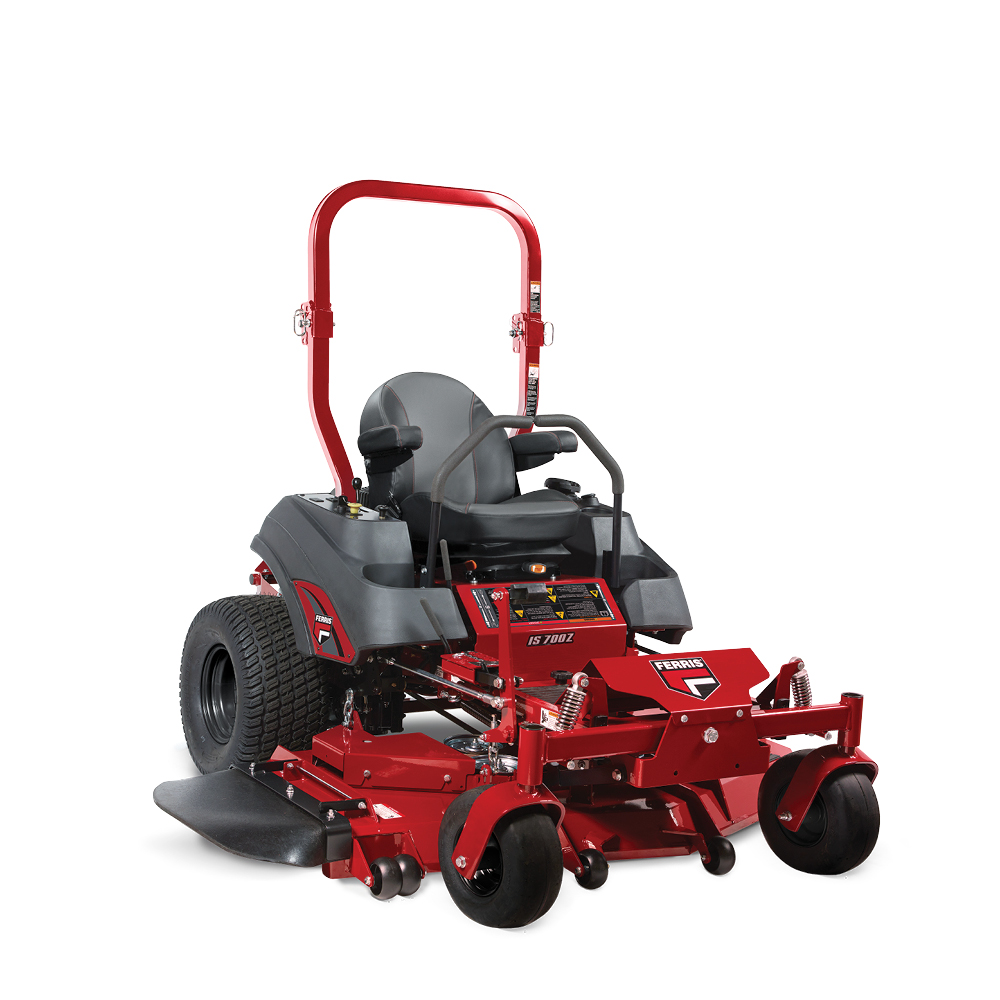
For farms with longer perimeter runs — multiple houses in a row with unobstructed access roads — the IS 700 at 60" is the productivity answer for that portion of the work.
Between-Flock Timing
Most biosecurity programs for integrators operating in South Mississippi — Sanderson, Tyson, Wayne — require vegetation control between flocks. The cleanout window is the right time for pad-edge and perimeter mowing. Before new birds are placed and before biosecurity restrictions tighten back up.
Running mowing equipment after bird placement increases foot traffic and creates contamination exposure. The practical answer is to complete the mowing during cleanout, before the new flock arrives. On a standard 42-to-49-day grow-out with a 10-to-14-day cleanout window, there's enough time to run both machines through a complete operation and have it ready for an integrator site check.
Who Should Skip the Stand-On
If you have two or three houses, wide spacing at the fan ends, and the clearance isn't actually limiting what a sit-on can do — skip the second machine. The IS 700 in a 52" configuration handles tighter areas well enough for most setups. The stand-on makes sense when the fan-end geometry is genuinely constraining, or when the farm is large enough that the productivity split between zones justifies two machines.
Buying a stand-on for a three-house farm where the fan ends are clear and accessible is adding cost and complexity without a real problem to solve.
Come Talk Through Your Layout
For farms in Simpson, Scott, or Covington County, Dykes Motors is at 3069 Hwy 49 in Collins — about 20 minutes from Mendenhall on Hwy 49. We stock the IS 700 60" and the SRS Z3X 52" Kawasaki. Financing is available through top national lenders for qualified buyers.
Call (601) 516-7255 or stop by to talk through what your specific house layout demands. Browse the full Ferris line at /ferris-mowers/catalog or reach out for parts and service at (601) 516-7255.
Related reading
Ready to find your mower?
We're an authorized Ferris dealer in Collins, MS — in stock, ready to demo, and financing available.