

HST or Gear: Choosing the Right Transmission for Your LS Tractor
The honest breakdown of hydrostatic vs gear transmissions for LS compact tractors, and how to pick the one that matches your land and your work.
The number one question we get on the lot is not about horsepower. It is about the transmission. People come in knowing they want a tractor but get stopped right there at HST versus gear and are not sure which way to go. Here is the plain answer.
What gear means
A gear tractor works like an older pickup truck with a manual. You pick your range and your gear, set your ground speed, and stay there until you decide to change. The MT226E is our gear model in the compact lineup, a 24.6 HP machine with a 12-forward, 12-reverse synchro shuttle box. To reverse, you flip a lever. No clutching to switch directions, but you do pick your speed by gear before you move.
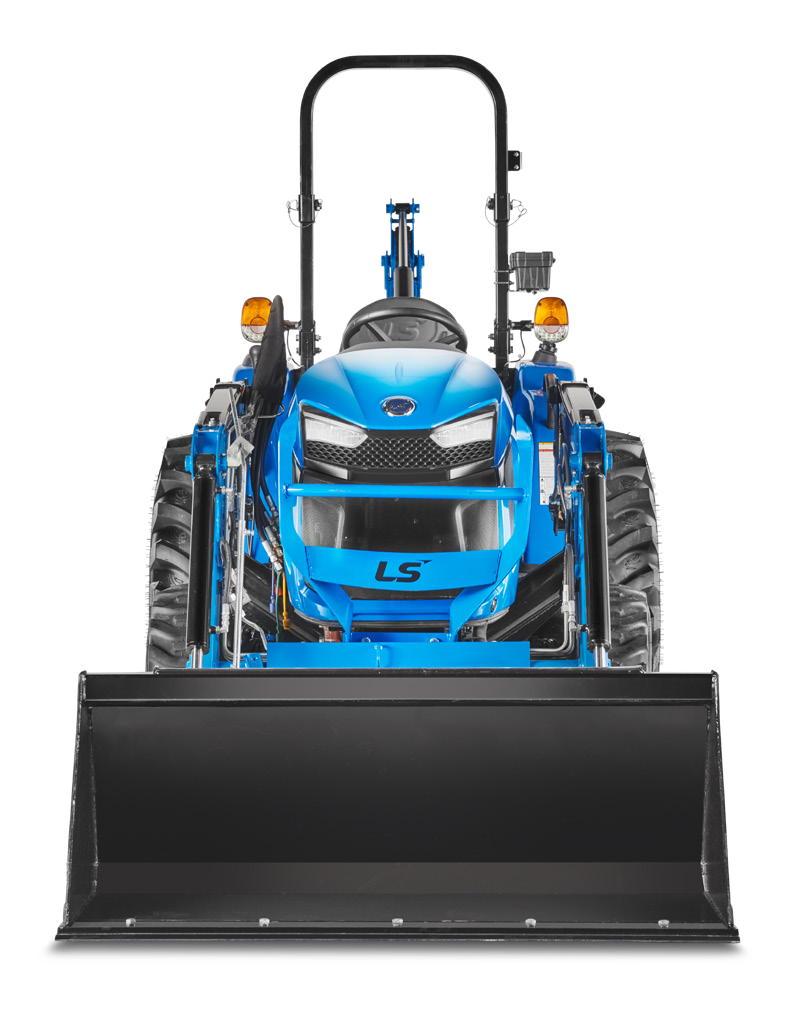
Gear tractors are simpler machines. Fewer hydraulic components, nothing to wear out in a pump housing, and the efficiency loss between engine and PTO shaft is lower. The MT226E makes 19.2 PTO horsepower from a 24.6 HP engine because most of that power goes straight through to the implement. That is a solid number for the size.
The tradeoff is fixed ground speed once you are in gear. If you are mowing a field in a straight line or pulling a box blade down a road, that is fine. If you are loading and backing and turning all morning, it gets tiring. Every direction change means working the shuttle lever, and after a few hundred of those in a day, you feel it.
What HST means
Hydrostatic transmission uses hydraulic fluid under pressure instead of mechanical gears to move the machine. You push a foot pedal forward to go, ease it back to slow down, push it past center to reverse. Speed is variable and smooth across the entire range. Stop, go, inch forward, back up, all without touching a clutch.
The MT232HE and the MT242HE are both HST models. The MT232HE runs 31.7 HP with 26.2 at the PTO. The MT242HE steps up to 42.5 HP with 34.8 at the PTO. Both use a three-range hydrostatic setup, so you have low, mid, and high ranges with infinite control within each one.
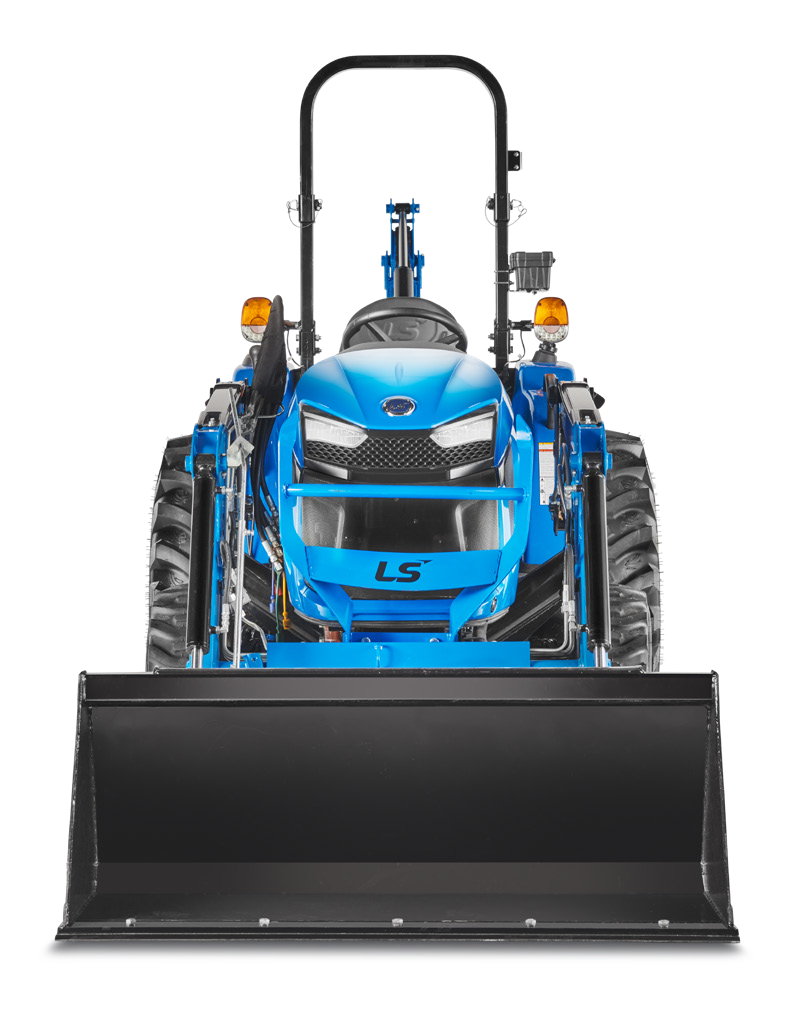
That infinite control is where HST earns its keep. Loader work is mostly back-and-forth maneuvering, and on a hydrostatic machine that becomes much less physical. Anyone who has spent a full day moving gravel or cleaning stalls on a gear tractor and then switched to an HST will tell you the difference is real. Less fatigue, shorter learning curve, and a new operator can be productive on the first day instead of the third.
There is a small efficiency trade. The MT226E's 24.6 HP engine produces 19.2 PTO horsepower. The HST version of the same engine, the MT226HE, produces 17.1 at the PTO because some power runs the hydraulic pump. That gap closes as you move up in horsepower, and for most property work it is not a practical concern. But it is worth knowing if heavy PTO loads are your main use.
How to decide
Three questions usually settle it for people.
First, what is the tractor doing most of the time. If the answer is mowing open ground, running an auger from a fixed position, or pulling a grader down a straight driveway, a gear machine does the job just as well and keeps the purchase price lower. If the answer is loader work, moving material in a confined area, or anything that involves constant direction changes, HST is the better fit.
Second, who is operating it. A single owner who has run gear equipment for years may prefer the feel of a gear tractor. A machine shared between a couple, or one that a teenager will also use, almost always works better as HST. The learning curve on hydrostatic is an afternoon, not a season.
Third, how much does raw PTO output matter. If you are running a big rotary cutter in heavy summer grass every week, that extra PTO horsepower from a gear model can make a difference. If your hardest PTO work is a 60-inch cutter in manageable pasture, the difference between 17 and 19 PTO horsepower is not going to change your day.
Most folks buying in the 25 to 42 HP range at Dykes end up with HST. A handful of gear buyers come in knowing exactly what they want, and they are right to want it. Both transmissions work. The question is which one fits the job and the operator.
If you want to sit in both and run them around the lot, come by at 3069 Hwy 49 in Collins. That is the fastest way to know which one feels like your tractor. Or give us a call at (601) 641-5475 before you make the drive.