

What LS Loader Lift Capacity Numbers Actually Mean
Loader specs trip up a lot of first-time buyers. Here is a plain-English breakdown of lift capacity, where it is measured, and what it means for the work you actually do.
A front-end loader is the attachment most people use every single day, and it is also the spec people misread the most. When you see a loader rated for, say, 1,200 pounds, that number comes with fine print worth understanding before you buy.
Lift capacity is measured at a specific point
A loader does not lift the same weight everywhere. The published rating is usually measured at the pivot pins, right where the bucket attaches. Out at the middle of the bucket, where your load actually sits, the real-world capacity is lower. That is not a trick, it is just leverage. So when you compare two loaders, make sure you are comparing the same measurement point, either both at the pins or both at the bucket center.
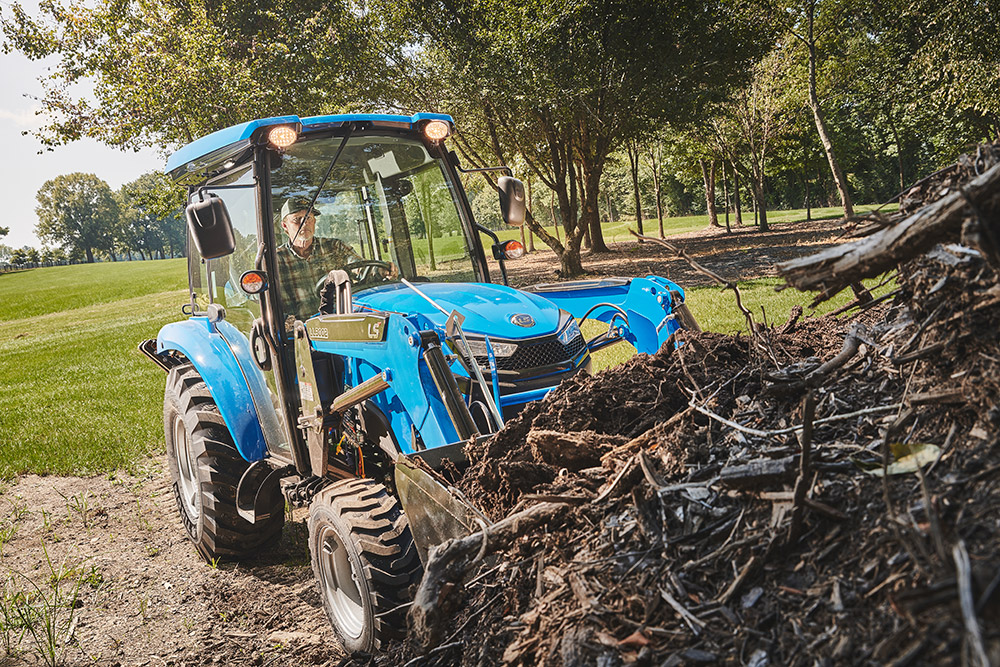
Lift height matters as much as weight
How high the loader reaches decides whether you can dump into a truck bed or a trailer, or stack a pallet. A loader that lifts plenty of weight but only reaches six feet will not load a dump trailer. Check the full lift height, and if you load trucks, measure your truck before you shop.
Match the loader to the tractor, not the other way around
Every LS tractor is paired with a loader sized for that machine. A bigger loader on a light tractor is dangerous, because a heavy load out front can lift the rear wheels off the ground. This is why LS builds matched loader packages and why we set them up that way. Rear ballast, like a filled implement or wheel weights, keeps you planted when you are carrying a full bucket.
What the work needs
- Moving mulch, gravel, and light material: most sub-compact and compact loaders handle this all day.
- Lifting full pallets, wet dirt, or gravel by the scoop: you want a compact or utility tractor with real lift capacity and the weight to back it up.
- Loading trucks and trailers regularly: prioritize lift height first, then capacity.
A simple rule
If you are close to a loader's rated capacity on paper, you are probably over it in the real world once the load sits in the bucket. Buy a little more capacity than your heaviest regular task, and add rear ballast. You will work safer and the tractor will last longer.
Want to see what a given LS loader actually picks up before you commit? Come run one on the lot. We will load a bucket with you so you can feel it. Call (601) 641-5475 or stop by 3069 Hwy 49 in Collins.